
Sewage backup cleanup in Battle Ground, WA, involves more than removing visible water. The work must address contaminated materials, moisture in affected areas, and controlled drying. Following the right sequence helps contain contamination and move the property toward recovery.
It’s understandable to want the damaged area cleared quickly, but skipping inspection can leave wet materials and hidden moisture behind. A thorough cleanup determines what can be cleaned, what must be removed, and where drying is needed.
This guide explains how material removal and targeted demolition fit into sewage cleanup, how moisture mapping guides drying, and what insurance coordination may involve. You’ll also learn how certified technicians support the process, what affects drying, and when professional help is a practical next step.
Key Takeaways
- Separate contaminated materials from items that can be cleaned to guide safe, targeted removal.
- Understand how insurance documentation and sewer backup coverage can affect a claim.
- See how moisture mapping helps identify wet areas and direct controlled drying.
- Learn why sewage cleanup calls for a methodical response from certified technicians.
- Find out how cleanup, water extraction, and insurance assistance can support the recovery process.
Do you work with insurance claims for Battle Ground, WA water damage?
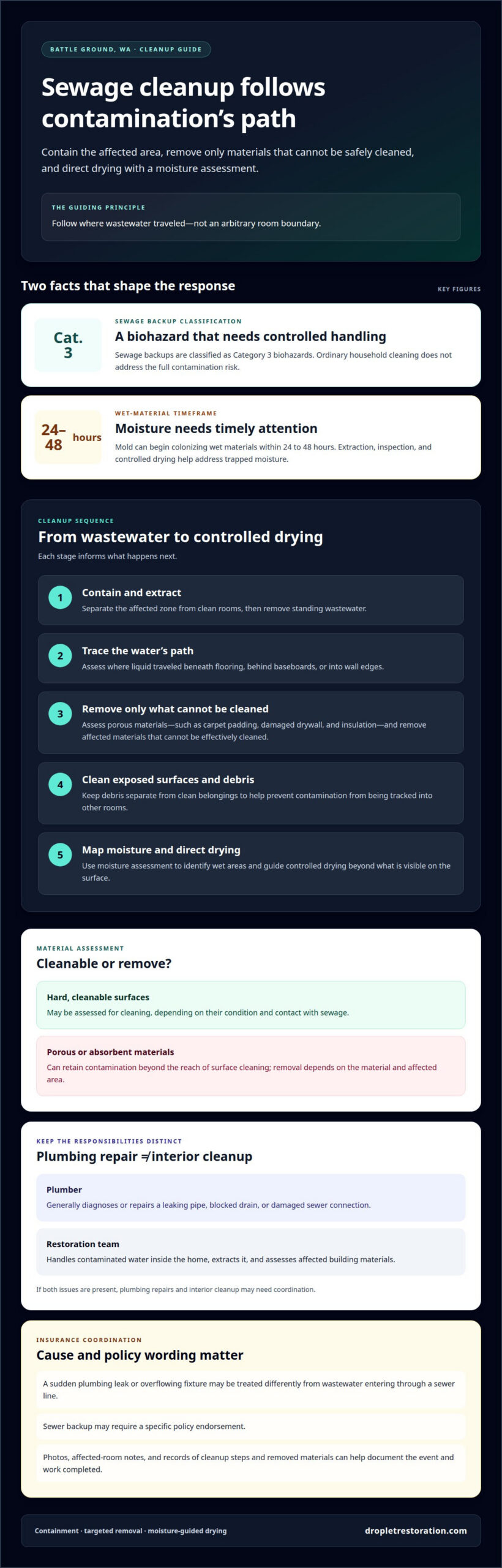
Insurance coordination can help organize a water damage claim, but coverage depends on the policy and the source of damage. A sudden plumbing leak or overflowing fixture may be treated differently from wastewater entering through a sewer line. Sewer backup may require a specific policy endorsement, so both the cause and policy wording matter.
For sewage backup cleanup in Battle Ground, WA, distinguish the plumbing issue from the property cleanup. A licensed plumber generally diagnoses or repairs a leaking pipe, blocked drain, or damaged sewer connection. A restoration team handles contaminated water inside the home, extracts it, and assesses affected building materials. If both issues are present, plumbing repairs and interior cleanup may need coordination.
After wastewater enters a basement or crawl space, avoid walking through it or carrying contaminated items into clean rooms. Keep people away from the affected area, and don’t use electrical equipment where water may have reached outlets or wiring. From a safe location, record visible damage and report the incident to your insurer. Photos of affected flooring, stored belongings, and the apparent source can help document what happened.
Plumbing leaks and overflows also need prompt attention, even when the water looks clear. Shut off the fixture or supply if you can do so safely, then note which rooms and materials got wet. Water can travel beneath flooring and into wall cavities, so a dry-looking surface doesn’t prove the area is dry. An inspection should assess the source, affected materials, and moisture beyond the visible stain.
Extraction removes standing water and reduces how much can spread through floors, lower walls, and stored belongings. In a basement, crews can inspect floor edges and wall bases; in a crawl space, they can assess wet insulation and exposed framing. Sewage needs controlled handling because it can contaminate porous materials. The affected materials and water’s path determine what can be cleaned and what needs removal.
Use these immediate steps to protect the area and prepare a clear claim record:
- Stop the water source only if the shutoff is safe to reach.
- Keep people and pets away from sewage and wet electrical areas.
- Photograph visible damage before cleanup changes the scene.
- List affected rooms, flooring, stored items, and plumbing fixtures.
- Report the event and ask how the policy addresses sewer backup.
Wet materials also need timely assessment to support mold prevention. Mold can begin colonizing wet materials within 24 to 48 hours. Extraction, inspection, and controlled drying help address moisture before it remains trapped in flooring, drywall, or crawl-space materials. During claim coordination, keep records of the damage, cleanup steps, and materials removed. That timeline helps connect the reported water event with the work completed.
Local permit and disposal requirements depend on the work involved. Interior extraction and removal of contaminated materials are different from repairing a private sewer lateral or changing municipal infrastructure. The City of Battle Ground uses a jetter truck to clear blockages in sewer main lines. Keep interior cleanup separate from sewer-line work, and document which areas and materials the cleanup addresses.
Material removal and targeted demolition
Targeted demolition removes only materials that cannot be safely cleaned, while limiting contamination’s spread into unaffected rooms. To reduce the chance of future backups, keep grease and debris out of drains and address recurring clogs before they cause another failure.
Sewage Removal and Contamination Control
Sewage removal begins by containing the affected areas and extracting standing wastewater. Crews separate contaminated zones from clean rooms, then assess where liquid traveled beneath flooring or behind baseboards. Sewage backups are classified as Category 3 biohazards, so ordinary household cleaning does not address the full contamination risk.
Drain cleaning addresses the blockage that caused the backup; extraction addresses wastewater inside the home. Battle Ground uses a jetter truck to clear debris from municipal sewer mains. A private drain or sewer connection may need separate attention. Removing indoor water without addressing its source can leave the property vulnerable to another backup.
For a home, a useful assessment follows the water’s path from the lowest affected point. For example, a basement floor drain may overflow first, with wastewater reaching nearby stored items and wall edges. The cleanup plan should distinguish contaminated surfaces from materials that need removal.
Contaminated Material Removal
Porous materials can absorb sewage and retain contamination beyond the reach of surface cleaning. Crews assess items such as carpet padding, damaged drywall, and insulation, then remove materials that cannot be effectively cleaned. Removal should follow the contamination, not an arbitrary room boundary.
Targeted demolition should expose affected areas without needlessly opening sound walls or removing unaffected flooring. For example, if wastewater has wicked into the lower edge of drywall, removal may focus on that section and the materials directly behind it. A clear record of removed materials also helps document the cleanup sequence.
Before removal, crews contain debris and keep it separate from clean belongings. This helps prevent contamination from being tracked through hallways or into adjacent rooms. Items with hard, cleanable surfaces may be assessed differently from absorbent items, depending on their condition and contact with sewage.
Debris Removal and Spill Cleanup
After contaminated materials are removed, crews collect debris and clean exposed surfaces in the affected area. Battle Ground’s vacuum truck is used to remove debris at manholes and clean up spills. That municipal work differs from handling contaminated materials inside a home, where cleanup must follow the wastewater’s path indoors.
A complete cleanup checks corners, floor joints, and the edge of remaining materials for residue. Crews remove debris in a controlled way, then prepare exposed surfaces for the next restoration steps. For support with sewage cleanup and material removal, start the response before contamination spreads into additional rooms.
Insurance coordination
Insurance coordination connects the documented damage, restoration work, and claim communications. In Washington, the policy wording and the water source help shape how a sewage backup claim is reviewed.
Claim Documentation
Build a clear record of the event. Note when the damage was discovered, the suspected source, affected rooms, visible damage, and actions taken to limit further loss. Photos can show where wastewater reached, damaged flooring, and materials removed during cleanup. Keep estimates, invoices, and written communications together so the timeline is easy to follow.
Record a sewer backup separately from a plumbing leak. Standard homeowners policies generally exclude sewer backup unless a specific endorsement has been added. The policy’s declarations and endorsements can show whether that coverage applies. The insurer determines coverage under the policy, so describe what happened accurately rather than assuming the cause or outcome.
For example, record whether wastewater came through a floor drain or a supply line leaked beneath a sink. These details help distinguish the source. If possible, take photos before removal, then keep records of affected materials and completed restoration work.
Claim Coordination
Claim coordination keeps restoration records aligned with communications to the insurer. A restoration team can document observed damage, describe completed work, and provide supporting records to the insurer. This assistance helps organize the claim, but the insurer makes coverage decisions under the homeowner’s policy.
For a sewage backup, the key coordination step is connecting the reported cause with the cleanup scope. If the claim concerns a sewer backup, the policy endorsement matters. If a plumbing failure caused the water damage, document that source separately. Clear descriptions help distinguish the event, affected materials, and restoration work.
Keep one timeline for the claim. Include when the damage was discovered, when the insurer was notified, when the inspection took place, and when restoration tasks were completed. Add dated photos and records as they become available. This timeline helps explain why extraction or material removal was needed without replacing the insurer’s coverage review.
Insurance billing depends on the policy, approved work, and payment arrangements. Don’t assume a restoration invoice means the insurer has accepted the claim. Keep copies of submitted documents and responses, and ask the insurer how it wants additional records delivered. Organized communication helps keep documents from being missed during review.
Certified technicians can document the structural areas they inspect and the restoration steps they complete. Those records give the insurer specific information about affected rooms and work performed. Droplet Restoration’s Insurance Claim Assistance can help organize this exchange while you focus on decisions about the property and claim.
Moisture mapping and controlled drying
Moisture mapping shows where water remains after extraction, including behind finishes. Technicians use these findings to direct drying and document progress across affected areas.
Moisture Detection
After contaminated materials are removed, technicians inspect nearby surfaces for hidden moisture. A damp baseboard, for example, may indicate water inside an adjacent wall or beneath flooring. Mapping helps distinguish wet areas from unaffected rooms and guides where drying equipment should be placed.
Readings at several points provide a clearer picture than checking one visibly wet spot. A technician can compare affected surfaces with nearby areas and record the results. This documentation helps track whether moisture levels are changing during drying and whether further inspection is needed around floor edges, wall cavities, or structural materials.
Drying Timelines
Structural drying for sewage backup cleanup in Battle Ground can take from a couple of days to just over a week, depending on the water and affected materials. Most residential sewage damage restoration projects take 3 to 5 days. These timelines describe different scopes: drying duration depends on moisture conditions, while the full project includes other cleanup tasks.
Progress checks matter more than a calendar estimate. Technicians revisit mapped locations, compare readings, and adjust equipment as conditions change. A wet subfloor may take longer to dry than an exposed surface because moisture can remain trapped beneath floor coverings. Recording each check gives the drying plan a clear history of conditions and adjustments.
Drying and Mold Prevention
Drying addresses moisture that can remain after visible sewage and debris are gone. Drywall left damp for more than 48 hours can lose structural integrity and develop mold colonies. That makes timely moisture checks important, especially where water reached lower wall sections, insulation, or flooring.
Controlled drying directs airflow and equipment toward identified wet materials instead of treating every room alike. For example, a mapped damp area beside a basement drain may need focused drying, while an unaffected adjoining room does not. Technicians continue checking affected areas and recording readings until the drying work is complete.
In a crawl space, exposed framing and insulation may dry differently from a finished basement wall. The materials, their location, and how deeply water penetrated all shape the drying approach. A moisture map connects those conditions to equipment placement and follow-up checks, keeping the restoration plan focused on the actual damage.
Battle Ground sewer pump stations are checked daily, including weekends. This maintenance context doesn’t replace site-specific moisture mapping after a backup: readings in affected areas still show where water remains and help guide controlled drying.
When considering cleanup support, Lovett states that its Oregon contractor license is CCB #125507. Moisture records can then document the conditions technicians find and how drying work progresses across the affected area.
IICRC-certified technicians
IICRC-certified technicians bring a relevant restoration credential to a sewage response. For Battle Ground property owners, their practical value lies in how they assess contamination, protect unaffected spaces, and document each step. Certification is one useful qualification to consider, alongside a clear explanation of the work planned for the property.
During the first inspection, technicians identify the likely source, visible contamination, and materials reached by wastewater. A basement backup may affect flooring, wall edges, stored belongings, and nearby rooms. The assessment should distinguish affected areas from clean spaces and explain how the work will be contained before removal and restoration begin.
Containment and work sequence matter. Technicians can establish a work area, remove contaminated materials, and keep debris from spreading through residential hallways. They should also identify when plumbing repairs are separate from interior cleanup. This distinction helps owners understand which work addresses the sewer failure and which restores damaged building materials.
During cleanup, ask for a plain-language explanation of the methods being used and the materials targeted for removal. For example, a crew should explain why sewage-affected carpet padding may need to be removed while a hard surface may be assessed for cleaning. Clear explanations help owners understand the decisions without confusing visible damage with hidden contamination.
Documentation supports restoration decisions and insurance coordination. Technicians can record affected rooms, observed damage, removed materials, and moisture readings as work progresses. If wastewater has traveled beyond the initial room, that finding should be added to the scope. Dated records help owners follow how conditions changed from inspection through drying.
Certification does not replace communication. Owners need to know who will supervise the work, how technicians will protect unaffected areas, and what findings might change the restoration plan. A useful update describes completed steps and what comes next, such as extraction, material removal, or another moisture check. Clear communication keeps decisions tied to conditions at the property.
For communities such as Battle Ground, a sewage event can disrupt daily routines and make repair decisions feel urgent. A methodical response separates immediate contamination control from later repairs. Technicians should explain what needs to happen first, what can wait, and how they’ll document progress. This sequence gives owners a practical way to track the cleanup.
Choose a team that can explain its assessment, containment steps, and documentation in direct terms. If sewage has entered your home, request sewage cleanup support to begin coordinating the response.
Lovett states that plumbing work in Washington requires WA L&I plumber certification under Chapter 18.106 RCW, distinguishing plumbing repairs from restoration work.
Droplet Restoration: Sewage Clean up
Droplet Restoration provides sewage cleanup for properties in Battle Ground affected by a backup. The work can address contaminated materials, water extraction, and moisture checks that guide drying. When a plumbing leak or overflow causes water damage instead, Droplet Restoration’s Water Damage Restoration service addresses affected areas. Insurance Claim Assistance can also help organize claim documentation and communication.
Turn to Droplet Restoration when sewage has entered living space, a basement, or a crawl space and cleanup requires coordinated removal and restoration. The team can assess the damage and explain the next steps for the property. Contact Droplet Restoration to discuss sewage cleanup for your home.
Move the Property Toward Recovery
Keep decisions tied to the property’s condition. If sewage has reached living space, avoid disturbing contaminated materials and arrange an assessment of affected areas. For sewage backup cleanup in Battle Ground, WA, a coordinated response helps identify what needs immediate attention and what should happen next.
Droplet Restoration can assist with sewage cleanup and related restoration needs. Its services also include Water Damage Restoration, Storm Damage Restoration, and Water Extraction & Removal for different sources of property damage. The right starting point depends on what happened and where water traveled. Share those details so the response can focus on the actual damage, not assumptions.
Taking action gives you a clear place to begin. Contact Droplet Restoration today to discuss the damage and the next steps for your property. A steady, well-documented recovery starts with a conversation.
Frequently Asked Questions
Do you handle sewage backups in Battle Ground homes?
Yes. Droplet Restoration provides sewage cleanup for homes in Battle Ground. Describe where wastewater entered and which rooms it reached so the team can assess the situation.
Can I clean up a sewage backup myself?
Professional cleanup is the practical choice for sewage-contaminated water. Keep people and pets away, and don’t move affected items into clean rooms. A mop cannot reveal whether wastewater has reached hidden areas.
Can you dry crawlspaces, wall cavities, and concealed moisture in Battle Ground, WA properties?
Yes. Drying can address moisture in crawl spaces, wall cavities, and other concealed areas. The affected materials and water’s path guide inspection and drying.
Do you also serve nearby communities around Battle Ground?
Yes. Nearby service communities include Vancouver, Battle Ground, Camas, Ridgefield, La Center, Longview, Kelso, Woodland, Castle Rock, and Kalama. Include your community and property location when describing the damage.
How quickly should I call after a sewage backup?
Call as soon as you discover the backup, especially if wastewater is still entering the home. Prompt assessment helps clarify which areas and materials were affected.
Is sewage backup dangerous to my family’s health?
Yes. Untreated sewage can pose a health risk to people in the home. Keep household members and pets away from contaminated water and belongings.
What should I do immediately after a sewage backup at home?
Keep people and pets out of the affected area, and avoid touching wastewater. If it’s safe, stop the source; otherwise, leave it alone. Record visible damage from a safe location and contact a cleanup team.
What health risks are associated with sewage-contaminated water?
Sewage-contaminated water can expose people to harmful contaminants. Avoid direct contact and keep contaminated belongings away from food and clean household items. If exposure occurs or someone feels unwell, seek medical guidance.