
Could a basement still be at risk of mold after the visible water is gone? Yes. Moisture can remain inside drywall, flooring, insulation, and framing, so removing standing water is only the first step in basement flood cleanup in Ridgefield, WA. The U.S. Environmental Protection Agency says mold can begin to grow within 24-48 hours in moist environments.
It’s understandable to focus on the water you can see. But prompt, thorough drying helps address hidden moisture and limit further damage. Water extraction and drying typically take 3-5 days, while full restoration can take several days to a few weeks, depending on the damage and repairs needed.
This guide explains what to do first, how cleanup and structural drying work, what affects the restoration timeline, and how sewage-contaminated water is handled. You’ll also learn why the water source matters and what happens when water reaches materials that can’t be safely dried in place.
Key Takeaways
- If it’s safe, stop the water source; keep away from electrical hazards and move valuables to a dry area.
- Record the damage and the steps taken to limit it. Coverage depends on the cause of the loss, the policy, and the property’s condition before the incident.
- Standing water removal is only part of cleanup. Moisture can remain inside building materials, so drying needs to address affected areas beyond what’s visible.
- Sewage backups involve contaminated water and call for professional cleanup and sanitizing.
- Learn what restoration involves, what can affect the timeline, and how water extraction and sewage cleanup can help move recovery forward.
How long does the water damage restoration process take?
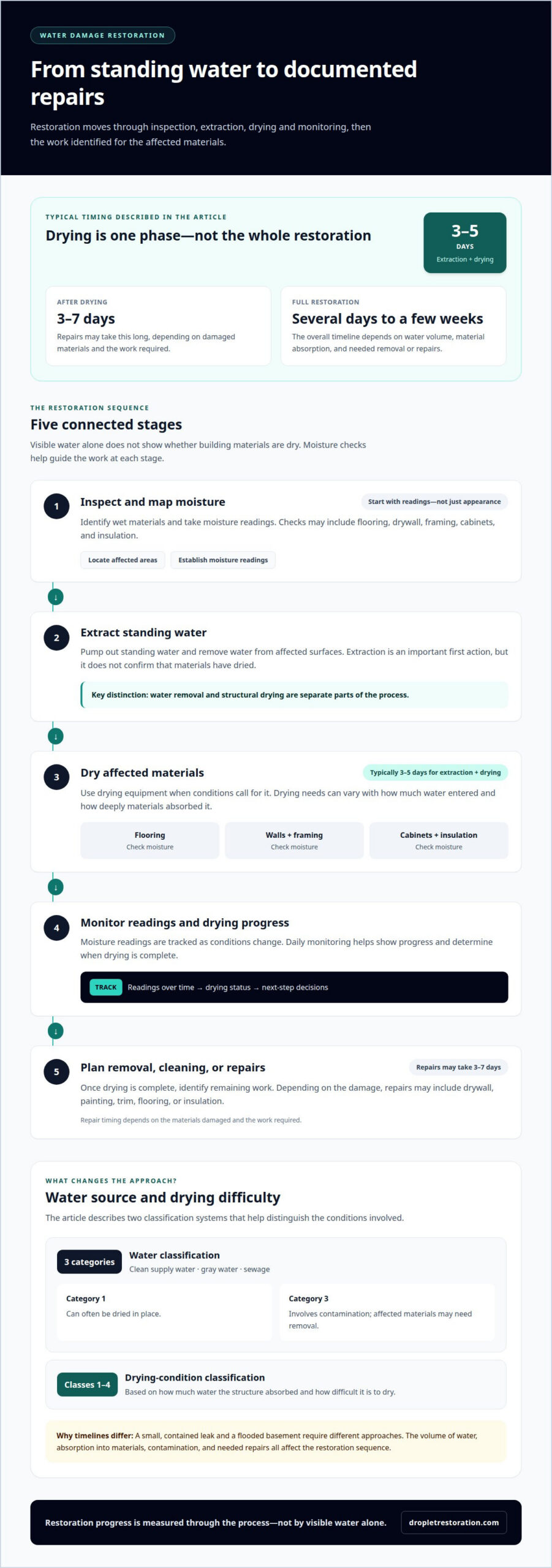
Water damage restoration can take several days to a few weeks when repairs are included. Water extraction and structural drying typically take 3-5 days. The full timeline depends on how much water entered, how deeply building materials absorbed it, and whether contaminated or damaged materials need removal. In Clark County, the restoration sequence begins with inspection and moisture checks, not just a visible-water estimate.
During the first visit, the response may include water extraction and drying equipment when the conditions call for it. Technicians can map moisture, take readings, and identify water in areas such as flooring, drywall, framing, cabinets, and insulation. Standing water removal alone doesn’t show whether those materials are dry. Daily moisture monitoring helps track progress and determine when drying is complete.
- Inspect and map: Locate wet materials and establish moisture readings.
- Extract: Pump out standing water and remove water from affected surfaces.
- Dry and monitor: Use drying equipment, then track moisture readings as conditions change.
- Plan next steps: Identify materials that need removal, cleaning, or repair.
Water source and drying difficulty affect the work. ANSI/IICRC S500 distinguishes three water categories: clean supply water, gray water, and sewage. Category 1 damage can often be dried in place. Category 3 involves contamination, so affected materials may need removal. The standard also classifies drying conditions as Class 1 through 4, based on how much water the structure absorbed and how difficult it is to dry. A small, contained leak and a flooded basement therefore require different approaches.
Drying time also matters for limiting further problems. According to the U.S. Environmental Protection Agency, mold can begin to grow within 24-48 hours in moist environments. If growth is present, drying alone doesn’t address it; the affected area needs an appropriate remediation plan. Prompt extraction and moisture control help avoid leaving damp materials in place while the restoration plan proceeds.
After drying, repairs may take 3-7 days, depending on the damaged materials and work required. Reconstruction may include drywall repair, painting, trim installation, flooring replacement, or insulation installation. Restoration in Ridgefield can move from extraction to repair only after drying is complete and the remaining work is identified. That sequence helps ensure the visible cleanup isn’t mistaken for fully resolved water damage.
What should I do immediately after water damage occurs?
Take these steps in order: control the source, protect people, then document the damage. If a pipe or fixture is leaking, shut off the main water supply if you can reach it safely. If water is near electrical equipment, don’t touch appliances or enter the wet area. Turn off power to the affected area at the breaker only from a dry spot. Never stand in water to reach a switch.
- Limit further damage. Move valuables to a dry location if you can do so safely. Avoid disturbing damaged materials or throwing items away before documenting them.
- Record what happened. Photograph or video the water’s location, visible damage, and affected belongings. Include wide views of each room and close-ups of damaged items. Note when you first noticed the problem and any steps taken to stop the water.
- Keep a running record. Save receipts for emergency purchases and temporary measures. Record dates, conversations, and claim details. During mitigation, moisture readings and drying logs can document how affected areas change over time.
Contact your insurer promptly and provide a clear account of the cause, when you discovered the damage, which rooms are affected, and what you did right away. Coverage depends on the cause of loss, policy terms, and the property’s condition before the incident. A standard homeowners policy usually covers sudden, accidental water damage, such as a burst pipe, but may not cover flood damage or gradual leaks. The insurer’s estimate and the restoration estimate may cover different parts of the work, so keep copies and ask for explanations of unclear items.
For damage in Ridgefield, keep claim-related documents together: photos, receipts, estimates, moisture logs, and written communications. Washington homeowners may choose their restoration contractor, and an insurance carrier cannot penalize them for that choice. The deductible remains the homeowner’s responsibility and can’t be waived, discounted, or absorbed into an invoice.
Clear records help connect the initial event to the mitigation and repair work. Share relevant photos, receipts, and claim details with the restoration team handling the property. For help coordinating the damage response and claim documentation, water damage restoration support can help keep the next steps organized.
Ridgefield homeowners should begin water-damage mitigation quickly to help limit further damage, even while contacting insurance. If you can reach it safely, shut off the main water supply before arranging repairs to the failed pipe, fixture, or roof.
Flood damage to wood-framed structures
How can you prevent future basement flooding in Ridgefield, WA? Keep gutters and drainage paths clear, and address plumbing leaks promptly. Ridgefield’s proximity to the Columbia River and surrounding lowlands is associated with high water tables. Heavy storms and rising groundwater can also flood properties.
Floodwater can affect more than the visible surfaces of a wood-framed basement. It may soak flooring, drywall, insulation, framing, and cabinetry. Wet drywall can conceal moisture in the wall cavity, while saturated insulation can hold water against framing. Water extraction removes standing water, but structural drying must also address moisture retained inside affected materials. A dry-looking floor alone doesn’t show whether the framing behind it has dried.
Restoration starts by locating the water and tracing its path through the structure. Technicians assess which rooms and materials are affected, then use moisture readings to guide drying equipment. Structural drying and continued monitoring help identify areas that need more attention. Materials that cannot be dried safely may need removal before repairs begin. This measured process helps prevent wet framing from being enclosed behind replacement drywall.
Time matters after a flood. Mold can begin to grow within 24-48 hours in moist environments, according to the U.S. Environmental Protection Agency. That risk makes prompt water extraction and drying important, especially where water has reached drywall, insulation, or wood framing. If mold growth is present, its affected materials and moisture source need attention as part of the cleanup plan.
Storm and flood cleanup depends partly on where the water entered. Heavy rain may push water through basement openings, while rising groundwater can seep through foundation areas. Wind-driven rain may affect roofs and exterior walls, allowing water to travel into ceilings or wall cavities before reaching lower levels. Restoration crews trace the intrusion path, remove water, and dry affected materials. A storm-related event may therefore require attention to both the basement and the entry point.
After drying, repairs address the specific materials that were damaged. Work may include replacing removed drywall or insulation and repairing affected flooring or trim. Drying comes first: covering damp wood can trap moisture inside the structure. For a Ridgefield property, inspecting framing, wall cavities, and basement materials helps define the repair scope and support a safer return to normal use.
Basement flood cleanup in Ridgefield
Basement flooding in Ridgefield can start with a plumbing leak, appliance failure, overflowing toilet, stormwater intrusion, or rising groundwater. The Columbia River and surrounding lowlands are associated with high water tables in the area. Identifying whether water came from inside the home, through the foundation, or from outside ground conditions helps guide the cleanup plan.
In an emergency, water extraction removes standing water before it spreads across flooring or into stored belongings. Next, inspect where the water traveled. A visible puddle may not reveal moisture behind baseboards, under flooring, or inside finished basement walls. Technicians assess affected surfaces and materials, then use moisture readings to guide drying and identify areas needing further attention.
Different water sources require different handling. A leaking supply line is not the same as stormwater entering from outside. A sewage backup involves contaminated water and requires professional cleaning and sanitizing. Cleanup may include containing the affected area, removing porous materials that cannot be safely retained, and planning sanitation and odor treatment. Don’t treat sewage-contaminated water like a routine appliance leak.
- Pipe or supply-line leak: Stop the water source when safe, then assess wet flooring and nearby materials.
- Appliance failure: Check the surrounding floor and adjacent cabinets for water spread.
- Stormwater or groundwater: Trace the entry point and inspect the basement perimeter.
- Sewage backup: Keep people away from contaminated areas until professional cleanup.
Ridgefield properties can also experience crawl space flooding from plumbing leaks, drainage problems, or heavy storms. Water beneath the home can affect insulation, raise humidity, and create odors. If the water path or source extends beyond the finished room, a basement response should account for connected areas. Extraction alone won’t resolve moisture in materials that remain wet.
Once standing water is removed, cleanup continues with drying, monitoring, and decisions about damaged materials. Flooring, drywall, insulation, and framing need separate assessment because each absorbs and releases moisture differently. Effective basement flood cleanup in Ridgefield, WA, matches the response to the water source, traces its full path, and addresses affected materials rather than stopping at the visible waterline.
What are the health risks of basement flooding and mold growth?
Floodwater can carry hazardous debris and contaminants, including in the Pacific Northwest. Contact with contaminated water or items can expose people to unwanted substances. Keep children and pets away from affected belongings, and avoid moving wet debris through clean parts of the home.
Hidden moisture matters, too. Drywall, insulation, flooring, crawl spaces, and framing can remain damp after visible water is gone. These concealed areas can support mold growth, so surface-level cleanup may miss moisture that affects indoor conditions. Musty odors or visible discoloration can signal an issue, but concealed spaces may need assessment even without obvious signs.
Limit exposure by keeping the affected area separate from living spaces while cleanup is underway. If floodwater or sewage has reached building materials, professional assessment can help determine what needs cleaning or removal. Arrange professional water cleanup to address contaminated water and affected materials.
Address water damage in Ridgefield homes promptly: prolonged moisture can increase the risk of swelling, mold growth, odors, and structural deterioration. Moisture left in place can continue affecting materials over time, even after the original water is gone. Swelling and structural deterioration can damage the property, while mold growth and odors can affect indoor conditions. Treating delay as part of the risk helps avoid assuming a damp area will resolve without attention. The longer moisture remains, the more relevant these risks become; prompt attention helps limit the opportunity for prolonged moisture to contribute to them.
Crawl space flooding in Ridgefield can result from plumbing leaks, drainage problems, or heavy storms, and moisture under a home can damage insulation, raise humidity, create odors, and lead to mold growth. Because the water is under the home, the consequences described are not limited to a visible wet surface: insulation can be damaged, humidity can rise, and odor or mold growth can become concerns. The possible causes also show why flooding in this area should not be attributed to one source without assessment; plumbing leaks, drainage problems, and heavy storms are all possible. In evaluating the risk, the central issue is moisture beneath the home and the effects it can have on insulation and indoor conditions. Addressing the water damage promptly keeps attention on the moisture before it contributes to the risks described.
Droplet Restoration: Sewage Clean up
Droplet Restoration provides sewage cleanup when a basement backup leaves contaminated water or affected materials behind. The work addresses sewage contamination and supports cleanup of the impacted area. For other basement water losses, Water Extraction & Removal and Water Damage Restoration help remove water and manage recovery. Storm Damage Restoration can also address water entering a basement during a storm.
Keep people away from sewage-affected rooms while cleanup is needed. Professional handling helps contain contamination and address materials that require removal, cleaning, or sanitizing. The right response depends on where the sewage traveled and which surfaces or belongings it affected.
For sewage or floodwater in your basement, contact Droplet Restoration to discuss cleanup.
Take the Next Step Toward Recovery
Choose a response that addresses the water source and the materials it reached. This helps move basement flood cleanup in Ridgefield, WA, from urgent water removal toward a clear recovery plan. Keep the affected area accessible for assessment, and share the details you’ve documented so the response can be tailored to the damage.
Droplet Restoration provides Water Damage Restoration, Storm Damage Restoration, and Water Extraction & Removal for property damage caused by leaks, storms, or flooding. If water has affected your basement, starting the right cleanup can help protect your property and clarify the next steps.
Contact Droplet Restoration today to discuss the water damage and the next step for your property. You can take recovery one practical step at a time.
Frequently Asked Questions
Can water damage cause mold growth?
Yes. Water damage can create conditions for mold growth when moisture remains in materials such as drywall, insulation, flooring, or framing. The U.S. Environmental Protection Agency says mold can begin to grow within 24-48 hours in moist environments. A damp smell or spotting can indicate an issue, but concealed areas may need moisture assessment even when the room looks dry. Pay attention to wall cavities and beneath floor coverings after a leak.
Ridgefield Water Emergency?
Treat a Ridgefield water emergency as urgent. If it’s safe, stop the source and stay clear of wet electrical equipment. Don’t walk into standing water or touch appliances in an affected area. If the source is sewage or stormwater, keep people and pets out. Once it’s safe, note where the water entered and which rooms it reached. This information can help responders understand the situation and support claim records.
Do you serve my city, town or ZIP code?
Yes, Droplet Restoration serves Ridgefield and nearby communities. Its local service area includes Vancouver, Battle Ground, Camas, La Center, Longview, Kelso, Woodland, Castle Rock, and Kalama. Services for water damage include Water Damage Restoration, Water Extraction & Removal, Storm Damage Restoration, and sewage cleanup. Share your city or town when contacting the team so they understand the property location and type of damage.
Does homeowners insurance cover this, and will I still owe my deductible?
Coverage depends on the cause of the water damage, your policy, and the property’s condition before the incident. Standard homeowners policies usually cover sudden, accidental water damage, such as a burst pipe, but may not cover flood damage or gradual leaks. The deductible remains your responsibility and can’t be waived, discounted, or absorbed into an invoice. Droplet Restoration also provides Insurance Claim Negotiation to assist with claims.
Does your service include the cleanup of contaminated floodwater?
Yes. Droplet Restoration provides sewage cleanup for sewage backups and contaminated water. Cleanup may involve containing the affected area, removing porous materials that cannot be safely retained, and planning sanitizing and odor treatment. The response depends on where contaminated water traveled and which surfaces or belongings it reached. Keep people away from the affected area while professional cleanup is needed.
How do you confirm that my building is completely dry?
Drying is assessed with moisture readings, not appearance or touch alone. Technicians take readings in affected materials and locations, then monitor them during drying. For example, a basement floor may look dry while moisture remains in nearby drywall, framing, or insulation. Comparing readings over time helps identify whether concealed areas still need drying before restoration work moves forward.
Which basement flood cleanup companies serve Ridgefield, WA?
For basement flood cleanup in Ridgefield, WA, Droplet Restoration provides Water Extraction & Removal and Water Damage Restoration. The team also handles Storm Damage Restoration and sewage cleanup, so the response can address different sources of basement water. Stormwater intrusion and a sewage backup, for example, call for different cleanup considerations. Droplet Restoration also provides Insurance Claim Negotiation to assist homeowners with water damage claims.
Do Ridgefield flood cleanup companies offer 24/7 emergency service?
Droplet Restoration offers 24/7 emergency water and storm damage restoration. If a basement is flooding, first focus on personal safety and avoid entering standing water or approaching wet electrical equipment. When it’s safe, note the source and affected rooms so you can describe the situation clearly. Emergency restoration can then address the water loss and the next steps for the property.