
In Kalama, Washington, contractor registration is legally required for comprehensive water damage restoration. Industrial property restoration in Kalama, WA, should begin with a registered contractor who can stabilize damage and help protect business operations.
Flooding can disrupt equipment, inventory, work areas, and essential building systems. Owners need clear answers quickly: what needs attention first, how affected areas will be dried, and how restoration can proceed while limiting disruption.
This guide covers how to respond to water intrusion, what restoration involves, and how to phase work around a facility’s needs. It also explains how commercial flood coverage may differ, what to document, and how professional water extraction and insurance claim assistance can support recovery.
Key Takeaways
- Understand how Washington contractor registration relates to water damage restoration work in Kalama.
- Learn why flood damage and other sudden water losses may be treated differently by commercial insurance policies.
- See how water contamination and the amount of affected material guide cleanup and drying decisions.
- Know the first priorities after water intrusion: protect people, control the source when safe, and document visible damage.
- Explore how water extraction, insurance claim assistance, and phased restoration can help limit disruption to business operations.
Are there licensed water damage restoration contractors in Kalama WA?
Yes. Washington requires contractor registration for comprehensive water damage restoration in Kalama. Registration is the relevant state requirement for this work.
To help organize an insurance claim, document the water source, affected areas, visible damage, and materials that may need removal. Photos and itemized work notes give owners and insurers a shared record of site conditions. A burst supply line and rising floodwater can involve different coverage: commercial policies typically cover sudden, accidental losses, while flood damage generally requires separate coverage.
For an NFIP claim, organize dated photos, records of affected contents, and restoration documents alongside insurer communications. Coverage depends on the policy and loss details.
For example, a storm-damaged Cowlitz County warehouse could document the roof entry point, wet storage areas, and affected materials. This is an illustrative scenario, not a report of a specific local project. Clear records link site conditions to the proposed work and claim discussion.
Washington contractor registration addresses the state requirement; insurance coverage depends on the policy and cause of loss. Droplet Restoration provides Insurance Claim Assistance to property owners managing water damage claims.
For comprehensive industrial water damage restoration in Kalama, Washington contractor registration is the relevant state requirement.
Standard homeowners insurance typically does not cover flood damage from rising surface waters, such as the Columbia River near Kalama, Washington. The source of water matters: rising surface water is different from a sudden, accidental release from a supply line. Owners can record what they observed and identify the apparent source without assuming that a particular policy covers the loss. The policy and circumstances determine coverage, so descriptions of damage should not promise a claim outcome or replace a review of the applicable terms.
For a property affected by rising water, record site conditions: where water entered, which areas and contents were affected, and what materials appear damaged. Dated photographs and itemized notes can connect those observations to the restoration work being considered. If the source is uncertain, note that uncertainty rather than presenting an inference as fact. Keep restoration documents and communications together so the observed conditions, proposed work, and insurance questions can be considered consistently. Contractor registration addresses the state requirement for the work; it does not determine whether flood damage is covered. Claim assistance can help organize information, but coverage depends on the policy and loss details. Separating a clear account of physical damage from insurance questions can make discussions more precise, especially when rising surface water is involved. Ask the insurer how the policy applies to the reported source and affected property, while retaining accurate records of what was observed.
Storm flooding and drainage-related water intrusion
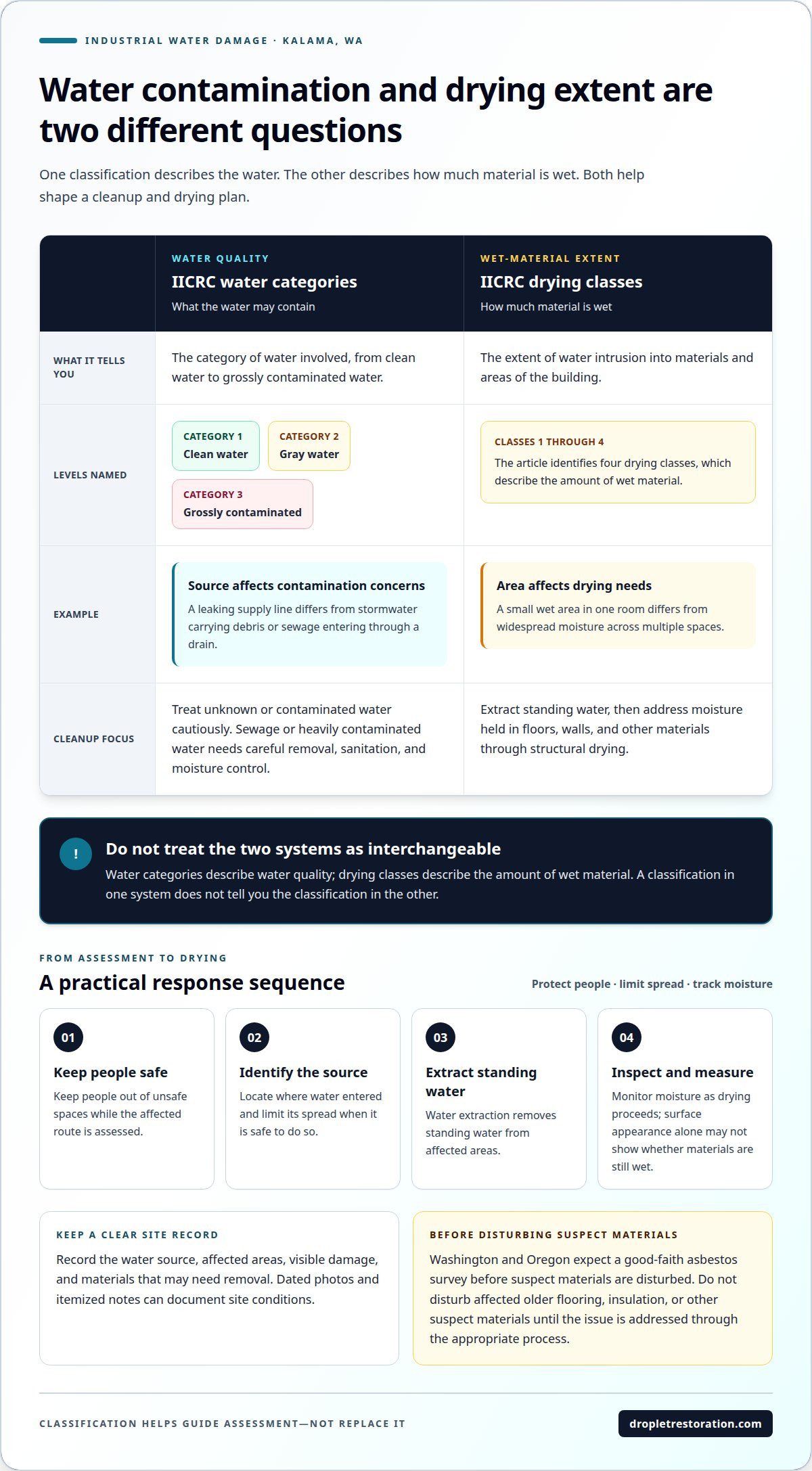
Stormwater can enter an industrial property through roof openings, exterior doors, loading bays, or overwhelmed drainage paths. In a warehouse, water might cross a concrete floor, reach electrical equipment, and soak cartons stored at floor level. First, identify where water entered and limit its spread. Keep people out of unsafe spaces while the affected route is assessed.
Water source and contact determine contamination concerns. The IICRC framework identifies Category 1 clean water, Category 2 gray water, and Category 3 grossly contaminated water. A leaking supply line differs from stormwater carrying debris or sewage entering through a drain. Treat unknown or contaminated water cautiously. Sewage or heavily contaminated water needs careful removal, sanitation, and moisture control to protect occupants and the building.
Older commercial buildings can also present environmental risks during cleanup. Washington and Oregon expect a good-faith asbestos survey before suspect materials are disturbed. If water has affected older flooring, insulation, or other suspect materials, do not disturb them during removal until the issue is addressed through the appropriate process. Floodwater and sewage may also contaminate surfaces, so cleanup plans need to account for the water source and affected materials.
Extraction removes standing water; structural drying addresses moisture held in floors, walls, and other materials. The IICRC S500 standard classifies the amount of wet material into Classes 1 through 4. These drying classes describe the extent of water intrusion, not whether water is clean or contaminated. A small wet area in one room and widespread moisture across multiple spaces call for different drying plans.
Effective flood cleanup tracks progress through inspection and measurement. Technicians inspect affected materials, extract water, and monitor moisture as drying proceeds. Surface appearance alone cannot show whether a wall cavity or floor assembly is still wet. Measurements and documentation help identify areas that need continued drying and when the plan should change. For example, wet drywall near a loading bay may need repeated checks after visible floor water is gone.
Drainage-related intrusion also requires attention to the route water followed. A backed-up floor drain can spread contaminated water into adjacent workspaces, while roof runoff may travel along a wall and collect beneath stored goods. Separate affected areas, remove contaminated water and materials carefully, and direct drying toward wet building assemblies. This sequence limits spread and gives the restoration team a clearer record of the work.
In Kalama, rising water from the Columbia River is a possible flood source, distinct from a broken interior pipe. Once it is safe to enter, record entry points and affected spaces, then arrange professional water extraction and drying. Prompt, controlled cleanup helps move the building from flooding toward a documented restoration plan.
Emergency source control and loss stabilization
At a Kalama industrial site, protecting people comes first. Keep workers out of standing water near electrical equipment, damaged ceilings, or unstable shelving. If it is safe, stop the active water source, such as a leaking supply line. Shut off affected utilities if needed, then record visible damage without entering unsafe spaces.
Emergency dispatch is available 24/7 for water and storm losses. On arrival, the response begins with a site assessment, source control, and a plan to contain water. A technician can identify affected rooms, the likely water path, and materials requiring removal. These steps help limit further damage while keeping the work focused on immediate hazards and stabilization.
Water damage restoration starts with mitigation, not reconstruction. The team extracts standing water, identifies wet building materials, and plans drying around the affected areas. For example, water around a production line may require a controlled work zone to keep people away from wet flooring and equipment. Moisture readings help track conditions that a surface inspection cannot reveal.
A clear sequence supports safe damage cleanup:
- Protect occupants and restrict access to unsafe spaces.
- Stop the water source when it’s safe to do so.
- Document visible conditions with photographs and notes.
- Extract water, remove affected materials as needed, and monitor drying.
Each step depends on the water source, how far it spread, and the building’s condition. A burst pipe in one service area differs from stormwater reaching several work zones. Record changes in affected areas so the restoration scope reflects actual site conditions.
Stabilization also means separating immediate mitigation from later repairs. Water extraction and drying address current moisture; reconstruction is a separate phase that may follow once affected areas have been assessed. This distinction helps owners understand which work addresses active water damage and which involves rebuilding. It also helps operations teams plan access and work areas.
For a warehouse with water entering near a loading bay, responders can isolate the wet route, remove standing water, and inspect adjoining storage spaces. They can document damaged contents and monitor moisture in affected materials. If the source is storm-related, the team can also record the entry point and conditions that contributed to the intrusion. This information supports a thorough mitigation plan and organized restoration.
After water damage, prompt source control and professional cleanup help move an industrial property from emergency response toward managed recovery. Keep workers clear of unsafe areas, preserve photographs and notes, and share site access details with the restoration team. These practical steps provide a clear starting point and help keep mitigation organized.
Service coverage around Kalama, Washington
Industrial restoration in Kalama, Washington, begins with the building’s water-loss conditions, not a one-size-fits-all construction plan. Water damage restoration and sewage cleanup address damage caused by water intrusion. The property’s location, safe access, affected spaces, and water source shape the response plan.
For a facility near Kalama’s industrial or riverfront areas, record the site entrance, affected building, and safest access route. A warehouse with water at a loading bay needs a different movement plan from an office with a wet kitchen. Clear site details help the restoration team define the work zone and organize equipment movement without disrupting unaffected areas.
Nearby locations can differ in access, building layout, and the routes water takes indoors. A property manager can provide the site address, an on-site contact, gate or entry instructions, and a description of affected areas. These details help organize the initial assessment and distinguish a localized leak from water affecting multiple rooms or buildings.
Restoration services focus on cleanup and returning water-affected spaces to a dry, usable condition. Work may include water removal, removal of materials that cannot be dried, and moisture monitoring. For sewage contamination, cleanup must account for affected surfaces and materials. The water source and extent of intrusion guide the work sequence.
Construction services differ from emergency restoration. After extraction and drying, an assessment may identify building materials that need repair or replacement. That finding helps define the next phase, but restoration planning should stay focused on the water loss. Unrelated remodeling or general construction is a separate scope, not a substitute for mitigation and drying.
Before work begins, establish which areas remain accessible and which need restrictions. For example, a plant may keep an unaffected office open while isolating a water-damaged storage room. A site contact can coordinate entry and communicate access changes. The restoration team can then focus on affected areas while maintaining clear boundaries around the work zone.
For an industrial property near Kalama, a useful site handoff includes the address, known water source, affected rooms, access details, and immediate hazards. Note whether water reached stored inventory, a kitchen, or equipment areas. These details support a more accurate assessment and help tailor cleanup to the property.
Owners can also prepare a simple site map showing entrances, affected spaces, and areas that must remain open. Marking a wet production corridor, for example, can help the team plan access around it. In Washington, this coordination connects restoration work with the facility’s layout, operating needs, and recovery priorities.
Business continuity, containment, and phased restoration
A water loss does not always require every part of an industrial property to stop operating. The work plan can separate affected spaces from areas that remain safe and usable. For example, a wet storage room may be isolated while an unaffected office continues operating. Clear boundaries help protect workers and keep restoration organized.
Start with a site map identifying water-affected areas, access routes, equipment, and essential operations. The restoration team can use it to plan extraction and drying around the facility’s layout. A production corridor, for instance, may need restricted access while nearby areas remain open. The situation determines which zones can operate safely during cleanup.
Containment limits disruption and keeps restoration tasks focused. The team can define a work zone, control entry, and keep unaffected inventory away from wet materials. Separate routes for staff and restoration work can also reduce congestion. Unlike a home with a single affected room, an industrial site may have connected departments, shared access points, or operations that depend on the same space.
Phasing gives owners a practical sequence for recovery:
- Stabilize: Address the active source and immediate site hazards.
- Extract: Remove standing water from affected floors and spaces.
- Dry: Monitor wet materials and adjust the drying plan as conditions change.
- Transition: Review completed mitigation and identify areas ready for the next work phase.
Each phase should reflect documented site conditions. If moisture remains in a wall or floor assembly, that area needs continued attention before it can be considered dry. Clear transitions between phases help owners understand what work is complete and what remains.
Business continuity also depends on communication. A designated site contact can share access changes, operating priorities, and newly affected areas. If water reaches a shipping space, for example, the contact can explain which routes must stay clear. The restoration team can coordinate around those needs without assuming that the entire facility must close or reopen at once.
Damage restoration and reconstruction are separate stages. Extraction and drying address water and moisture; later repairs depend on the condition of affected materials. Keeping the phases distinct helps owners track progress and plan operations around the work. It also avoids assumptions about reopening before affected areas are ready.
For a Kalama facility facing water damage, share the site layout and operating priorities to support a phased plan. Discuss a phased recovery plan that addresses containment, access, and restoration sequencing.
After water, fire, mold, or storm damage, contact a professional restoration company right away; make that contact promptly as the first step in arranging professional restoration support for the property.
Droplet Restoration
Droplet Restoration helps Kalama property owners manage water damage and storm-related disruption, from initial mitigation through organized recovery. The team provides Water Damage Restoration, Storm Damage, Water Extraction, and Insurance Claim Assistance. Contact the team when water affects industrial spaces, interrupts operations, or leaves you unsure what to do next.
For an industrial site, restoration planning must account for affected areas, access, and business priorities. Droplet Restoration can remove water, document damage, and coordinate claim communication as restoration progresses. This helps owners move from immediate cleanup toward a managed recovery plan.
If water or storm damage has affected your property, contact Droplet Restoration to discuss the situation and next steps.
Set Your Recovery Plan in Motion
For industrial property restoration in Kalama, WA, prepare a clear site handoff. Identify one person to coordinate access, share the facility’s operating priorities, and note which areas must remain available. This gives the restoration team practical direction from the start and connects decisions to the way your business operates.
Water damage can shift priorities as affected spaces become clearer. Keep key site information together, including access instructions, affected areas, and changes that could affect work zones. A current, straightforward handoff helps the team adapt its plan while keeping operational needs in view.
Droplet Restoration can help you move from uncertainty toward an organized response. Contact Droplet Restoration to discuss your facility’s situation and next steps. With a clear plan and the right information in hand, you can begin moving your property toward recovery.
Frequently Asked Questions
Do you work with insurance companies?
Yes. Droplet Restoration works directly with all insurance providers and assists homeowners and businesses with claims. For a commercial loss, organize claim correspondence alongside records of affected property, such as equipment, inventory, and building materials. Keep communications together and note which items relate to mitigation versus later repairs. This gives owners and insurers a shared record for discussing the claim without assuming coverage.
How Much Does Commercial Restoration Cost?
Commercial restoration pricing depends on the specific loss, and a quote follows a quote request. The scope can change with the water source, contamination, affected materials, extraction needs, drying conditions, and site access. A roof leak affecting stored goods differs from water beneath flooring. A project-specific quote reflects the work identified for that property rather than a generic commercial rate.
How long does the restoration process take?
The restoration timeline depends on how far water spread, affected materials, site access, and drying results. A facility with active production may need to coordinate work windows around safe access. The team can return areas to use in phases as conditions allow. Contamination cleanup, stored contents, or moisture within concealed building assemblies can change the work sequence, so operational plans should account for progress updates.
How quickly can a water damage company respond in Kalama WA?
Droplet Restoration says its IICRC certified technicians respond within 90 minutes to mitigate damage and begin recovery. Restoration work continues after arrival, with the sequence shaped by the site’s conditions. For an urgent call, provide the Kalama property address, an accessible entrance, and a concise description of active water and immediate hazards. These details help coordinate access and prepare for the initial response.
Industrial property restoration contractors near Kalama WA reviews and certifications
Washington requires contractor registration for comprehensive water damage restoration in Kalama. Droplet Restoration’s technicians are IICRC certified.