
A retail store can remain open during flood cleanup only when work areas are safely separated from customers and staff. Whether that is practical depends on how far the water spread, which routes remain safe, and whether essential areas are affected.
Cleanup typically moves from extraction to drying, restoration, and insurance documentation. This guide explains how those steps shape store access and recovery.
Key Takeaways
- Learn how extraction and structural drying remove water and prepare affected areas for restoration.
- Understand how the source and condition of floodwater affect decisions about inventory and building materials.
- See why prompt, thorough drying helps limit moisture-related problems inside a store.
- Find out what documentation can help organize an insurance claim and support the recovery process.
- Use practical factors such as work-area separation and safe access to judge whether parts of your store can remain open.
Commercial water extraction and structural drying
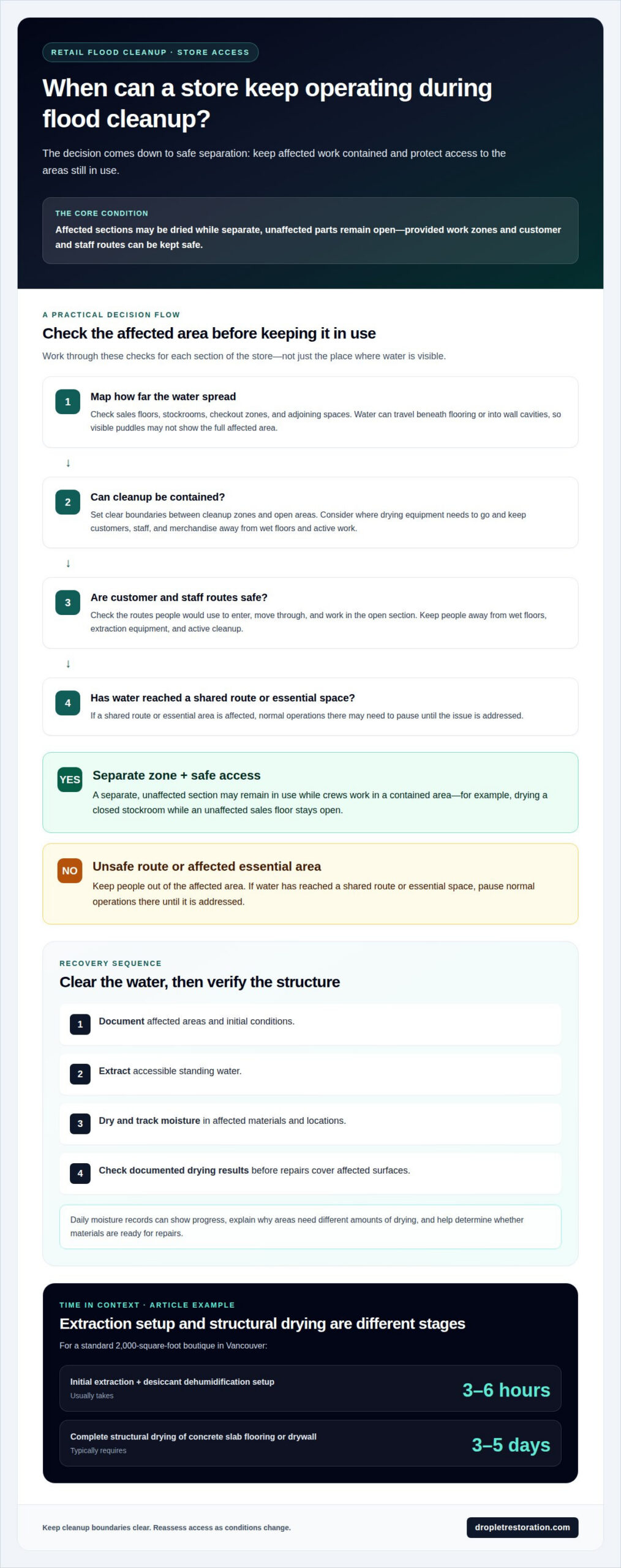
Water extraction removes standing water, while structural drying targets moisture in floors, walls, and other building materials. The order matters: document affected areas, extract water, and monitor drying before deciding on repairs.
Map the wet areas across sales floors, stockrooms, checkout zones, and adjoining spaces. Water can travel beneath flooring or into wall cavities, so visible puddles may not show the full extent of damage. Extract accessible water with equipment suited to the affected area, then assess which materials need focused structural drying.
Drying Around Operational Store Sections
Drying can continue in affected sections while separate parts of the store remain open, provided access and work zones can be safely separated. For example, crews may dry a closed stockroom while an unaffected sales floor stays in use. Consider how far water spread, where equipment must go, whether customer and staff routes are safe, and whether work can be contained.
Set clear boundaries between cleanup zones and open areas. Keep merchandise, staff, and customers away from wet floors, extraction equipment, and active work. If water has reached a shared route or essential space, normal operations there may need to pause until it is addressed.
After extraction, drying equipment helps remove moisture from building materials. The approach depends on what got wet: concrete, drywall, and floor assemblies hold moisture differently. Account for materials and spaces behind or beneath visible surfaces so repairs do not cover areas that still need drying.
Moisture Tracking and Drying Verification
Daily moisture tracking creates a record of drying progress in affected areas and materials. Documentation aligned with IICRC S500 can organize the initial damage observations, drying actions, and subsequent readings. For example, a floor reading can be compared with later readings from the same area to show whether moisture is declining.
Record which locations were assessed and note changes in conditions or equipment. Drying checks help determine whether materials are ready for repairs. Clear records also explain why one area may need more drying than another, even when both look dry at the surface.
Before repairs begin, compare documented drying results with the affected materials and surfaces. If moisture remains, continue drying and reassess rather than closing the area prematurely. This connects extraction to a verifiable recovery process: remove standing water, monitor the structure, and confirm progress before repairs cover the work.
For a standard 2,000-square-foot boutique in Vancouver, initial commercial water extraction and desiccant dehumidification setup usually take 3 to 6 hours; complete structural drying of concrete slab flooring or drywall typically requires 3 to 5 days.
Water damage restoration
Water damage restoration begins with identifying the source, affected materials, and immediate hazards. Those findings guide extraction, sanitation, and decisions about what can be cleaned or must be discarded. For retail store flood cleanup in Castle Rock, WA, assessment also defines the work zone and helps protect unaffected parts of the business.
Emergency Water Damage Response
In Castle Rock, shut off the affected fixture or main water supply if it is safe to do so. Keep staff and customers away from standing water, electrical equipment, and unstable materials. An assessment maps affected areas and identifies whether the water came from a clean source, sewage, or storm runoff.
Timing can affect inventory decisions. Many retail items may be salvageable if restoration begins within the first 24 hours. Photograph affected areas and goods as conditions allow, then group damaged items by location for assessment. Don’t use appliances reached by floodwater until a professional has checked them. These steps help document the loss without moving items before their condition is recorded.
Flood Water Assessment and Sanitation
Water classification helps determine the cleanup approach. Under the IICRC S500 framework, clean water intrusion is Category 1. Sewage or contaminated storm runoff is Category 3 and may require disposal of porous retail goods, since absorbed contamination can’t always be removed through surface cleaning.
Discard food, beverages, and medicine exposed to floodwater or mud. Remove drywall and insulation that contacted floodwaters, along with other water-absorbing items that cannot be cleaned or disinfected. Wash hard surfaces with hot water and soap or detergent, then disinfect according to product directions. Antimicrobial treatment may support sanitation when contamination requires it.
Flood Cleanup Hazards and Assistance
Floodwater can carry sewage and other contaminants. Wet materials can also hide electrical hazards and trapped moisture. Keep people out of affected areas during assessment. Because mold may develop where moisture remains, drying and removal decisions should include concealed spaces, not just visible surfaces.
For a flood-damaged retail business in Washington, permit requirements depend on the work, particularly if cleanup leads to building repairs. Keep people away from electrical systems and contaminated areas during assessment. Local disaster assistance options vary by event. Organize damage photos, inventory records, and cleanup documentation for an insurance claim or assistance application.
Castle Rock businesses need a response that assesses water damage, extraction, sanitation, and affected materials. If sewage or contaminated runoff entered the store, sewage cleanup support can address that cleanup need. A retail store flood cleanup plan in Castle Rock, WA, also benefits from clear records showing which goods were cleaned, removed, or set aside during restoration.
Mold remediation
After a retail flood, assess moisture to identify building materials and furnishings that need further attention. A thorough review guides cleanup decisions before repairs or restocking begin.
Moisture Monitoring and Hidden Areas
Look beyond visible flooring. Moisture may remain inside wall assemblies, beneath floor coverings, or behind fixed shelving. Record affected locations and materials, then compare readings as work progresses.
Include stockrooms, basement storage, and spaces beneath display fixtures. Water can move away from its entry point, so the visible edge of a wet area may not show its full extent. Assessment findings help determine where more drying, cleaning, or material removal is needed.
Organize records by store area. For example, note which wall sections or floor assemblies were assessed and whether readings changed after drying. This gives the restoration file a clear record of conditions before repairs cover those areas.
Basement Flooding and Affected Furnishings
A flooded basement can damage stored merchandise, furnishings, flooring, and lower wall sections. Separate wet belongings from dry stock, and document their condition and location before moving them. The water source and the condition of each material help determine whether cleaning or removal is appropriate.
Review shelving, cartons, display materials, and stored supplies individually. Porous items that absorbed contaminated water may need different handling from hard surfaces. Keep affected goods clearly identified while cleanup decisions are made, so they are not accidentally returned to sale or storage.
For an insurance claim, photographs and written notes can show which spaces and items were affected. Take wide views of the basement and close-ups of damaged materials. Keep these records with cleanup documentation to connect observed conditions with the work completed.
Before repairs or restocking, review the assessment and drying progress for each affected area. This helps prevent unresolved moisture or damaged materials from being concealed behind new finishes or stored inventory. Clear records also give managers a practical basis for planning the next stage of recovery.
Treat suspected mold growth as a separate cleanup concern, and document the affected area and materials. Avoid covering the area or returning items until cleanup decisions are complete. Keep affected belongings identified, noting where they were found and what action was taken. The U.S. Environmental Protection Agency states: Mold allergens can trigger allergic reactions or asthma attacks in people allergic to mold. When planning work, consider whether people with known mold allergies or asthma may enter the area, and arrange access accordingly.
Review the affected space after drying and before repairs or restocking. Recheck recorded locations, including concealed areas identified during the moisture assessment, and update the record with new observations. If the extent of growth or appropriate handling is uncertain, consult a qualified remediation professional before disturbing affected materials. Keep photographs, notes, and cleanup decisions together with the restoration documentation. This helps managers track which areas were addressed and what remains unresolved, and reduces the chance that affected materials return to storage or sale before review. Include a final walkthrough in the recovery plan, and record decisions about materials and furnishings before putting the space back into use.
Insurance documentation and direct billing
Clear records connect visible damage, cleanup work, and recovery decisions in a retail insurance claim. Document the loss before affected items are moved, then keep records updated as work progresses.
To document flood damage, take dated photos of each affected area and item, record the water source if known, and list damaged inventory by location. Keep cleanup notes, invoices, and technician findings together in the claim file.
Damage Documentation and Scope of Loss
Build the scope of loss area by area. Photograph standing water, damaged flooring, walls, fixtures, stock, and equipment before removal or cleaning. Include close-ups and wider views that show each item’s location.
Keep an inventory with item descriptions, quantities, and condition. Record what was discarded, cleaned, or moved, and retain related receipts or purchase records. Trained technicians can document affected materials and completed work, linking the damage to the restoration in the claim file.
Update records as conditions change. Note when extraction begins, which rooms are affected, and whether opened wall or floor areas reveal additional damage. Save moisture readings and drying records alongside initial photos. This timeline distinguishes the original loss from later discoveries and explains changes to the recovery scope.
Organize files by store area, such as the sales floor, stockroom, and office. Label images consistently and keep copies of written communications with the insurer. An organized record makes it easier to discuss specific rooms, inventory groups, and cleanup tasks without relying on memory.
Insurance Billing and Claim Assistance
Claim assistance can help organize damage documentation and communicate restoration details to an insurer. Direct billing means the restoration provider submits billing information to the insurer. It does not establish coverage or determine the policyholder’s payment responsibilities.
Keep the estimate, work records, and insurer communications in the same claim file. Compare documented work with affected areas, then note questions or differences for discussion. This ties billing to the actual cleanup and restoration rather than an unclear summary.
Insurance claim assistance is most useful when documentation moves forward alongside the work. Share claim details and available policy information through the claim process, and keep copies of every submitted record. The restoration team can work directly with insurance providers to support claim coordination, while the insurer determines coverage under the policy.
Before closing the file, gather initial photos, the inventory list, technician records, drying documentation, and final invoices. A complete record explains what happened, what work addressed it, and how the documented scope supported the store’s recovery.
Can business operations continue during the restoration process?
Yes, a store may continue operating in unaffected areas when restoration work is contained and safe access remains clear. The decision depends on where water spread, which areas crews need to enter, and whether customers and staff can remain separate from cleanup activity. For retail store flood cleanup in Castle Rock, WA, assess each operating area against the work zone and access routes.
Commercial property insurance coverage depends on the policy wording and the cause of the water loss. Business interruption coverage also depends on policy terms. Review the relevant sections with your insurer, including how they address flood cleanup, damaged inventory, and interrupted operations.
Separate the affected zone from any area that remains open. If water reached a stockroom but not the sales floor, restoration may be contained in the stockroom while customer access stays limited to dry, unaffected areas. Keep wet floors, equipment, and cleanup materials away from active routes. If work blocks an entrance, checkout area, or essential route, normal operations there may not be practical.
Protect inventory and business assets before moving them. Document each item’s original location and condition, then separate dry goods from water-affected stock. Keep products away from active drying equipment and wet surfaces. Discard food, beverages, and medicine exposed to floodwater or mud. For other goods, consider the water source, material, and whether they can be cleaned or disinfected when deciding what to salvage.
Mitigation can reduce disruption by addressing wet areas and planning work around essential store functions. Restoration teams can prioritize extraction, isolate work zones, and coordinate drying with access needs. Identify functions such as sales, receiving, and staff entry so the work plan accounts for them. A coordinated retail store flood cleanup in Castle Rock, WA, can focus on affected sections while keeping separate areas available when conditions allow.
Document interruptions as they happen. Record affected operating areas, dates of closure or restricted access, and why each space could not be used. Save daily sales or scheduling records showing operational changes, alongside photos and restoration updates. For example, note when the stockroom closed and when inventory handling resumed. These records give the insurer details to assess under the policy’s business interruption terms.
Keep communications organized in one claim file. Include policy details, damage records, the restoration scope, and notes about changes to store access. Share updates when the affected area or operations change. Clear records connect cleanup decisions with business impacts and help explain the recovery timeline.
For a practical plan to contain damage and support store recovery, discuss commercial water damage restoration with the restoration team.
Droplet Restoration: Sewage Clean up
Droplet Restoration handles sewage cleanup when contaminated water reaches retail areas, stockrooms, or inventory. Services also include water extraction, water damage restoration, and storm damage cleanup. The team focuses on affected spaces and materials, helping you move from immediate cleanup toward an orderly recovery.
Turn to the team when sewage or storm runoff has entered the store, or when standing water has affected building materials and merchandise. Share where water spread and which areas need attention so the cleanup can address the loss directly. Contact Droplet Restoration to discuss the damage and next steps.
Move Your Store Toward Recovery
Turn cleanup findings into a clear plan for your store. Base decisions on the affected areas, the condition of your inventory, and the access your staff and customers need. For retail store flood cleanup in Castle Rock, WA, a coordinated response can help move your business from disruption toward a safer, more organized recovery.
Droplet Restoration provides water damage restoration, storm damage cleanup, and water extraction for businesses facing flood impacts. Share what happened, which parts of the store are affected, and what your team needs to resume operations. That gives the restoration process a practical starting point while keeping documentation and day-to-day business needs in view.
Contact Droplet Restoration to discuss flood cleanup and take the next step toward restoring your store. A clear plan can help you move forward with greater confidence.
Frequently Asked Questions
Do Castle Rock flood cleanup companies offer 24/7 emergency response?
Some do, but availability varies by provider. Droplet Restoration offers 24/7 emergency water and storm damage restoration in Castle Rock and nearby communities, including Vancouver, Battle Ground, Camas, Ridgefield, La Center, Longview, Kelso, Woodland, and Kalama. Around-the-clock service can be useful when flooding threatens inventory or blocks access outside regular business hours. Once the property is safe to assess, share which areas and business operations are affected.
How quickly should a flooded retail store be cleaned and dried?
Begin cleanup as soon as the site can be assessed safely, rather than waiting for visible signs of mold. The U.S. Environmental Protection Agency advises drying wet buildings and furnishings within 24-48 hours to help avoid mold growth. Prioritize wet stock, low wall areas, and enclosed spaces where moisture can remain hidden. An assessment can guide the drying approach based on affected materials and their condition.
What steps are involved in commercial flood cleanup and restoration?
Commercial cleanup generally proceeds from assessing the source and affected areas to extracting water, drying materials, cleaning, and preparing for repairs. For example, a store with a wet sales floor and a separate stockroom may need each area assessed independently. The water source and affected materials guide sanitation and salvage decisions. Documentation throughout the work connects the initial damage with the cleanup completed and the areas ready for recovery.
How do cleanup costs differ for clean water, gray water, and sewage flooding?
The cleanup scope depends on contamination and how far water spread, so a clean-water loss may require different work from gray water or sewage. More contaminated water may call for more extensive sanitation and disposal of porous items that cannot be cleaned. Affected materials, hidden moisture, and the areas involved also shape the work. There is no reliable cost comparison without assessing the specific loss, and the water category alone does not establish a price.
What permits or health and safety rules apply to flood-damaged retail businesses in Washington?
Permit requirements depend on the work, particularly if cleanup leads to building repairs. Keep people away from standing water, electrical systems, unstable materials, and contaminated areas during assessment.