
Floodwater can leave serious hazards behind after it recedes. The first steps after home flooding are to return only when authorities say it’s safe, avoid standing water and electrical hazards, and photograph damage before moving belongings. Contact your insurer promptly and keep records of cleanup expenses.
It’s natural to want to start clearing rooms right away. But a careful initial check can protect people, preserve useful evidence, and help prevent further damage. Look for signs of structural problems, keep children and pets away from affected areas, and don’t use electrical equipment in wet spaces.
This guide explains how floodwater can affect walls, floors, utilities, and household items. You’ll learn what to check before going inside, how to approach water removal and cleanup safely, and which belongings may need special care. Follow the steps in order, and stop whenever a hazard makes it unsafe to proceed.
Key Takeaways
- Look beyond visible water: moisture can affect wall cavities, flooring, and household items, so drying and disinfection need a careful plan.
- Keep clear records of damage, cleanup, and temporary repairs to support the recovery and insurance process.
- Use appropriate protective gear and avoid disturbing materials when hidden hazards or contamination may be present.
- Handle keepsakes with care: avoid heat and direct sunlight, and don’t pull apart damp photographs or papers that have stuck together.
- Professional water damage restoration can help address water removal and drying when flooding affects your home.
How might a flood damage my home?
- Photograph damaged rooms and belongings before moving anything. Keep cleanup receipts and a written log of events and temporary repairs. Contact your insurer promptly to start a claim.
- Know what coverage to review. Standard U.S. homeowners insurance typically doesn’t cover flood damage to a home. Private flood insurance or a National Flood Insurance Program policy typically covers it, subject to the policy.
- Check beyond visible surfaces. Floodwater can soak drywall, flooring, insulation, and wall cavities. A wall cavity may take weeks to dry completely, even when the surface looks dry.
- Use fans, air conditioners, and dehumidifiers to remove moisture, but only when it’s safe to use electricity. Drying a flooded home completely can take between two and four weeks before it’s ready for rebuilding.
- Wash and disinfect flooded areas and household items that contacted floodwater. A cleaning solution can be made with half a cup of bleach in 1 gallon of water. Floodwater may contain sewage, chemicals, or debris, so use protective gear and keep children and pets away.
- If flooding makes your home unsafe to occupy, arrange shelter. In the United States, call the American Red Cross at (800) 733-2767 to find a shelter.
Include open windows in the drying effort alongside fans, air conditioners, and dehumidifiers. Focus on drying the home rather than relying on surfaces that merely appear dry. Wall cavities can remain damp even when the surface looks dry, and complete drying can take weeks. Use equipment only when electrical conditions are safe, and keep assessing affected rooms and materials as cleanup proceeds.
Immediate safety checks and electrical hazards
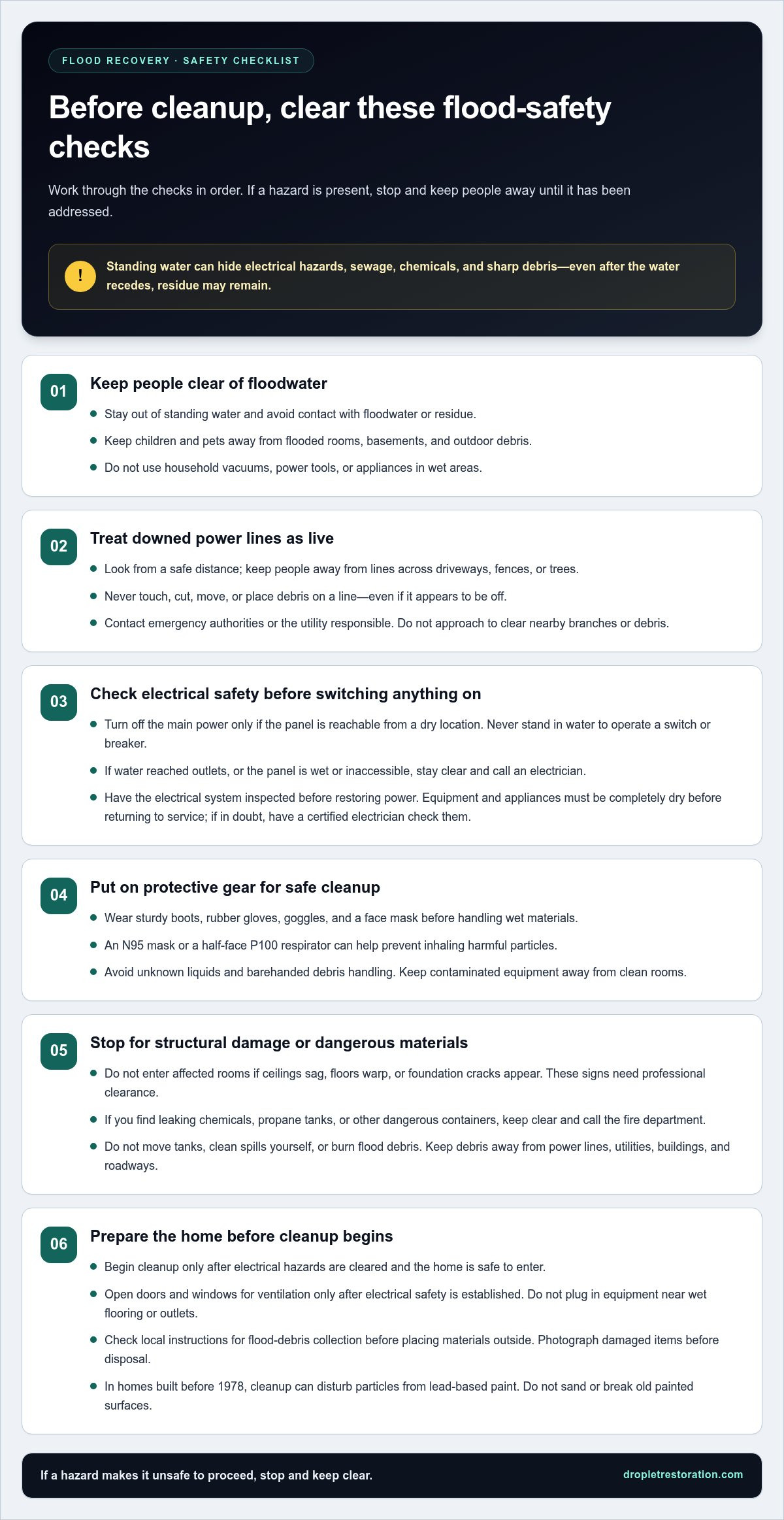
- Begin the first steps after home flooding by keeping clear of standing water. It can conceal electrical hazards, sewage, chemicals, and sharp debris. Keep children and pets away from flooded rooms, basements, and outdoor debris. Don’t use a household vacuum, power tool, or appliance in wet areas. Avoid contact with floodwater and residue, even after the water recedes.
- Look for downed power lines from a safe distance. Never touch, cut, move, or place debris on a line, even if the electricity appears to be off. Keep people away from lines across a driveway, fence, or tree. Contact emergency authorities or the utility responsible for the line. Don’t approach to inspect or clear nearby branches and debris.
- Turn off the main power only if you can reach the panel from a dry location. Never stand in water to operate a switch or breaker. If floodwater reaches electrical outlets, or the panel is wet or inaccessible, stay clear and call an electrician. Have the electrical system inspected before restoring power. Keep appliances and tools unplugged until the area is safe.
- Choose protective gear before approaching contaminated materials. Wear sturdy boots, rubber gloves, a face mask, and goggles when cleanup is safe. Floodwater may carry raw sewage, chemicals, and sharp objects, and residue can remain after the water recedes. Avoid touching unknown liquids or handling debris barehanded, and keep contaminated equipment away from clean rooms.
- Leave hazardous materials to responders. If you find leaking chemicals, propane tanks, or other dangerous containers, keep clear and call the fire department for inspection or removal. Don’t move tanks or clean spills yourself. Never burn flood debris, which could release toxic substances. Keep debris away from power lines, trees, poles, fire hydrants, meters, buildings, and roadways.
- Check structural conditions before entering affected rooms. Stop if ceilings sag, floors warp, or foundation cracks appear. These signs can indicate a risk that needs professional clearance. Avoid household vacuums and power tools while hazards remain. As the first steps after home flooding move from safety checks to recovery, consider professional water damage restoration for water removal and drying. Explore water damage restoration as a next step.
In the United States, electrical equipment and appliances must be completely dry before being returned to service. If there is any doubt, have a certified electrician check them.
Professional water removal and cleanup
Begin cleanup only after electrical hazards are cleared and the home is safe to enter. Follow a controlled sequence to remove water, dry materials, and manage debris.
- Confirm electricity is safe before using equipment inside. Open doors and windows for ventilation only after electrical safety is established. Don’t plug in fans, vacuums, or appliances near wet flooring or outlets. If the system needs inspection, wait before starting equipment. As you work through the first steps after home flooding, keep equipment and cleanup supplies away from areas with unresolved hazards.
- Check local instructions before placing debris outside. Officials may specify where and when flood debris will be collected. Keep discarded materials clear of roads and access points. Separate water-affected items from belongings that stayed dry, and photograph damaged materials before disposal. Follow local collection guidance rather than burning debris or leaving it near utilities.
-
Wear Protective Gear for Cleanup
Put on boots, rubber gloves, goggles, and a face mask before handling wet materials. An N95 mask or a half-face P100 respirator can help prevent inhaling harmful particles. Floodwater may leave sewage, chemicals, and sharp debris behind. Avoid bare-hand contact, and change contaminated gear before entering clean areas.
Take extra care in homes built before 1978. Flood cleanup can disturb particles from lead-based paint. Don’t sand or break old painted surfaces as a shortcut. Keep children and pets away from the work area, and stop if you encounter unknown chemicals or hazardous materials.
- Ventilate and dry affected rooms when electrical conditions are safe. Fans, air conditioners, and dehumidifiers help move moisture out of the home. Open windows and doors to promote airflow only after confirming electricity is safe. Track damp areas, including flooring and wall edges. Dry surfaces don’t prove concealed materials are dry, so don’t close walls prematurely.
-
Seek Professional Cleanup Assistance
Call a professional water-damage restoration company when flooding affects multiple rooms, water remains inside wall cavities, or contamination makes cleanup unsafe. Professionals can remove water, dry affected areas, and assess materials that household equipment may not reach. Have the HVAC system checked and cleaned by a professional experienced in mold cleanup before turning it on.
Get help when wet drywall or insulation needs removal. One suggested approach is removing drywall at least 1 foot above the flood-water line, down to the floor. If the first steps after home flooding reveal hidden moisture or work beyond safe household cleanup, professional restoration help can support recovery.
- Keep cleanup organized from the first load of debris. Record what was removed, where water reached, and which rooms still need drying. Save receipts and photos with your insurance records. After debris removal, continue drying and monitor damp materials. Don’t restart HVAC equipment or cover affected areas before they’ve been properly assessed and dried.
Checking safety before returning home
Return only after local authorities indicate the home is safe. Check the structure and utilities before settling inside.
- Wait for official clearance before entering an evacuated home. HUD recommends assessing structural integrity before entry. From outside, look for sagging ceilings, warped floors, foundation cracks, or other visible damage. Stay off damaged structures because they could collapse, and watch for snakes or other animals. Keep children and pets away during inspection and recovery work.
-
Check Personal Safety and Utilities
Use a battery-powered flashlight when entering, not candles, gas lanterns, or torches. If the home has been closed for several days, open doors and windows, then let it air out for at least 30 minutes before staying inside.
Turn off electricity, gas, and the main water supply only if you can do so safely. If you smell gas, leave immediately and notify the gas company or emergency authorities. Don’t return until they say it’s safe.
- Keep gasoline-powered equipment outside and away from openings. The Centers for Disease Control and Prevention says to operate gasoline-powered pumps, generators, pressure washers, and other gasoline-powered tools outdoors at least 20 feet from doors, windows, and vents to reduce carbon monoxide poisoning risk. Never run these tools inside a home, garage, or enclosed space.
-
Check Food Safety After Flooding
Discard food that contacted floodwater, including packaged items. Also discard perishable food that wasn’t properly refrigerated during a power outage, or food with an unusual odor, color, or texture.
Use local guidance to determine whether tap water is safe to drink. Until its safety is established, use bottled, boiled, or treated water for drinking, cooking, and personal hygiene. Keep potentially contaminated food separate from safe supplies.
-
Check Private Well Water Safety
Continue using bottled, boiled, or treated water if flooding may have affected a private well. Don’t assume the water is safe because it looks clear or has no unusual smell. Follow local guidance on whether well water is safe to drink, cook with, or use for personal hygiene.
Don’t let household members drink or prepare food with potentially contaminated well water. Use an alternate safe supply until local guidance indicates the water is suitable for use.
- Check each room again before resuming normal use. Look for new signs of structural damage, standing water, or utility problems after the initial inspection. Keep children and pets out of affected areas while recovery work continues. If the home’s safety changes or a new hazard appears, leave and follow local authorities’ instructions.
Removing water-damaged belongings and materials
Sort belongings by condition before moving them. Keep safe, dry items separate from flood-damaged materials, and record what you remove.
- Photograph each damaged room and item before cleanup changes the scene. Capture waterlines on walls, wet carpet, damaged furniture, and items that contacted floodwater. Keep receipts for cleanup expenses and note what you discard. These records help create a clear account of the disaster for insurance or assistance documentation.
- Move dry, undamaged belongings to a secure location if the route is safe. Use clean containers for items from unaffected rooms, and keep them away from wet carpet, debris, and contaminated surfaces. Don’t carry flood-damaged objects through clean areas. Separate items by room so you can track which belongings need cleaning, drying, or disposal.
- Handle photographs, letters, books, and artwork gently. Air-dry these items indoors, away from direct sunlight. Don’t use hair dryers, irons, or ovens, which can damage paper and images. If damp photographs or papers have stuck together, leave them joined rather than pulling them apart. Separating them can tear surfaces or remove printed details.
- Protect keepsakes that can’t be dried promptly. The National Archives and Records Administration says flood-damaged keepsakes that cannot be dried within two days can be wrapped in freezer paper and frozen temporarily while you consult a professional. Label the package with its contents and the date, then keep it separate from food and other household items.
- Assess carpet, furniture, and porous household items individually. Floodwater can leave contamination in materials even after visible water disappears. Don’t assume an item is clean because its surface looks dry. Keep items that contacted floodwater apart until they can be properly cleaned, disinfected, or discarded. Avoid using heat on delicate belongings, especially paper, photographs, and artwork.
- Remove damaged building materials only after documenting them and making the work area safe. Cutting about a foot above the waterline is one suggested approach for water-damaged drywall. Hidden moisture can remain beyond visible staining, so avoid closing walls or covering damp materials. Keep removed drywall and other debris separate, and follow local disposal instructions.
- Turn off the impulse to save every item. Prioritize dry belongings, important papers, and keepsakes that can be preserved safely. Leave heavily contaminated materials or hidden moisture for professional assessment. If flooding has damaged household materials, get help with water damage recovery to support safe removal and drying.
Droplet Restoration: Water Damage Restoration
Droplet Restoration provides Water Damage Restoration when floodwater has soaked rooms, materials, or belongings. Its certified IICRC technicians respond within 90 minutes to mitigate damage and begin recovery. Professional support can help address water removal and drying, especially when moisture has reached concealed spaces or household cleanup cannot safely manage the damage.
Turn to Droplet Restoration when standing water, wet building materials, or lingering moisture call for professional support. The team also provides fire damage restoration, mold removal, and storm damage restoration.
Contact Droplet Restoration to discuss the next step for your water-damaged home.
Move from immediate response to a clear recovery plan
Once immediate hazards are addressed, give each affected room a clear next step. Mark areas that still need drying, materials that need removal, and belongings that need careful handling. This simple plan helps household members avoid disrupting active cleanup and keeps recovery decisions organized.
The first steps after home flooding can shape how smoothly recovery progresses. Reassess the home as conditions change, and bring in restoration support when damage extends beyond safe household cleanup. Droplet Restoration provides water damage restoration, fire damage restoration, and mold removal to address different damage concerns as recovery progresses.
If you need help planning the next step, contact Droplet Restoration about your home’s flood damage. A focused property damage inspection can help you move forward with a clearer path toward recovery. Take it one room at a time, and keep safety at the center of every decision.
Frequently Asked Questions
If my house was flooded, can I attempt to get rid of the water?
Yes, you can remove water yourself when the area is safe and the water source has stopped. Start with accessible areas, and don’t use electrical equipment near wet outlets, cords, or appliances. Avoid direct contact with floodwater, which may contain sewage, chemicals, or sharp debris. If water has reached concealed spaces or cleanup presents hazards, leave that work to restoration professionals.
What should you do immediately after your home floods?
Protect people first, then prevent avoidable damage. Follow evacuation instructions and keep children and pets away from affected areas. Once authorities allow you to return, assess hazards from a safe position before entering. Photograph rooms and damaged belongings before moving them, then contact your insurer and record cleanup expenses. These actions create a clear sequence for safety, documentation, and recovery.
When is it safe to enter a flooded home, and what hazards should you check for?
Enter only after authorities indicate it’s safe and the structure appears stable. From outside, look for leaning walls, sagging rooflines, or visible foundation damage. Inside, use a battery-powered flashlight and watch for damaged floors, exposed wiring, gas odors, and displaced animals. Don’t enter a room if the floor feels unstable or debris blocks a safe exit. Leave and seek help if you encounter hazards.
How do you shut off electricity, gas, and water safely after flooding?
Shut off utilities only when controls are reachable from a dry, safe location. Never step into water to reach a breaker, gas valve, or water shutoff. If the electrical panel is wet, outlets are submerged, or you smell gas, leave the area and contact the appropriate utility or emergency authorities. Don’t restore power or relight appliances until the affected systems have been checked.
How should you document flood damage for an insurance claim?
Make a room-by-room record before cleanup changes the evidence. Photograph wide views, close-ups, waterlines, and labels or model details on damaged appliances. Keep a written timeline of the flooding, calls, and temporary repairs, then store receipts with the images. Save copies somewhere outside the affected home. Contact your insurer promptly and follow its instructions for claim documentation.
How can you remove standing water and dry a flooded home safely?
Start only after electrical hazards are addressed. Use water-removal equipment only in safe conditions, and keep gasoline-powered tools outdoors, away from openings. Ventilate with open windows and doors once electricity is confirmed safe. Fans, air conditioners, and dehumidifiers help dry affected areas, but hidden moisture may remain in walls or floors. Track damp spots and don’t cover materials before they’re dry.
What should you throw away after a flood, including food and damaged belongings?
Discard food touched by floodwater, including sealed packages, and food that spoiled during a power outage. Separate belongings that contacted floodwater from dry items. Some keepsakes, such as photographs and papers, may need careful air-drying rather than disposal. Don’t pull apart damp papers that have stuck together or use heat on delicate items. Photograph belongings before discarding them and follow local instructions for debris pickup.
How do you prevent mold after flooding, and when is professional mold remediation needed?
Dry affected rooms and materials promptly, using ventilation and dehumidifiers only when electrical conditions are safe. Check beyond visible surfaces, especially inside wall cavities, beneath flooring, and around damp insulation. Contact a mold-removal professional when moisture remains concealed, mold is visible across affected materials, or safe cleanup exceeds household capabilities. Have the HVAC system checked and cleaned before turning it on after floodwater entered the home.